Eleven first coloring books for toddlers, about fruits, vegetables, animals, vehicles, numbers, letters, colors, shapes, opposites, the body and feelings. Every page pairs one big, bold picture with one thing to learn, one way to move and just one or two crayons.
Point at a book to open its cover. Tap it to look inside.
11books
198coloring pages
44learning games
1–2crayons a page
2+years and up
The series
Eleven books, one gentle rhythm
Every book follows the same page rhythm, so a child who knows one book already knows how to use the next. Each book stands on its own, so you can start with any of them.
Shadow match
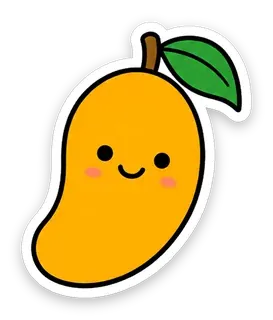
Mango!
From the game “Which shadow is mine?”
Book 1
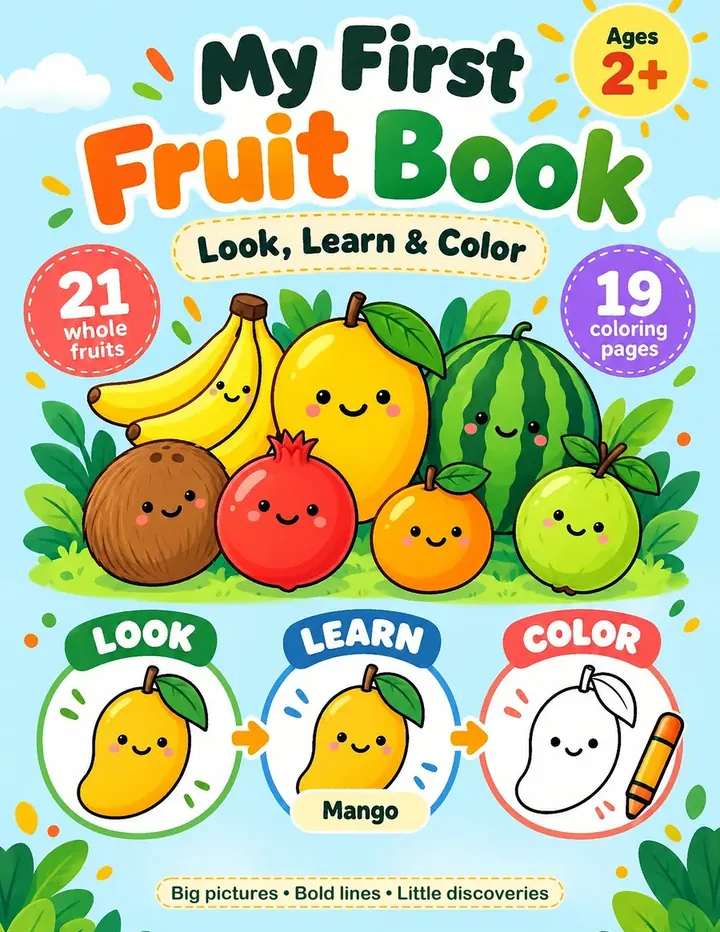
My First Fruit Book
21 fruits, from mango to jamun
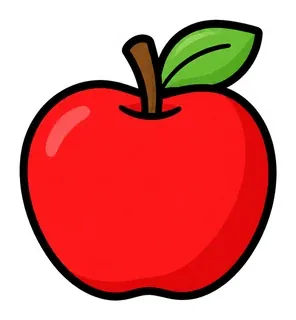
Meet one fruit at a time: look at its real colors, clap the beats in its name, then color. The pages grow from simple round shapes to curves and stripes, then groups and patterns, and end with two fruits together.
21 fruits
19 coloring pages
4 games
28 pages
Games: Which shadow is mine? · Into the bowl! · Count with me! · Which basket?
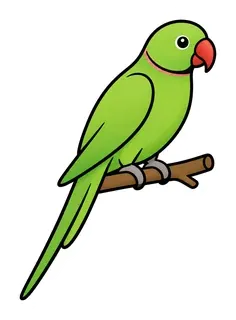
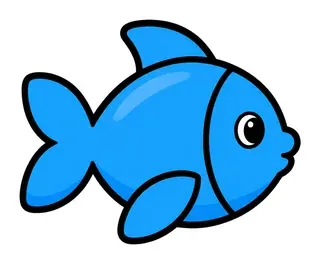
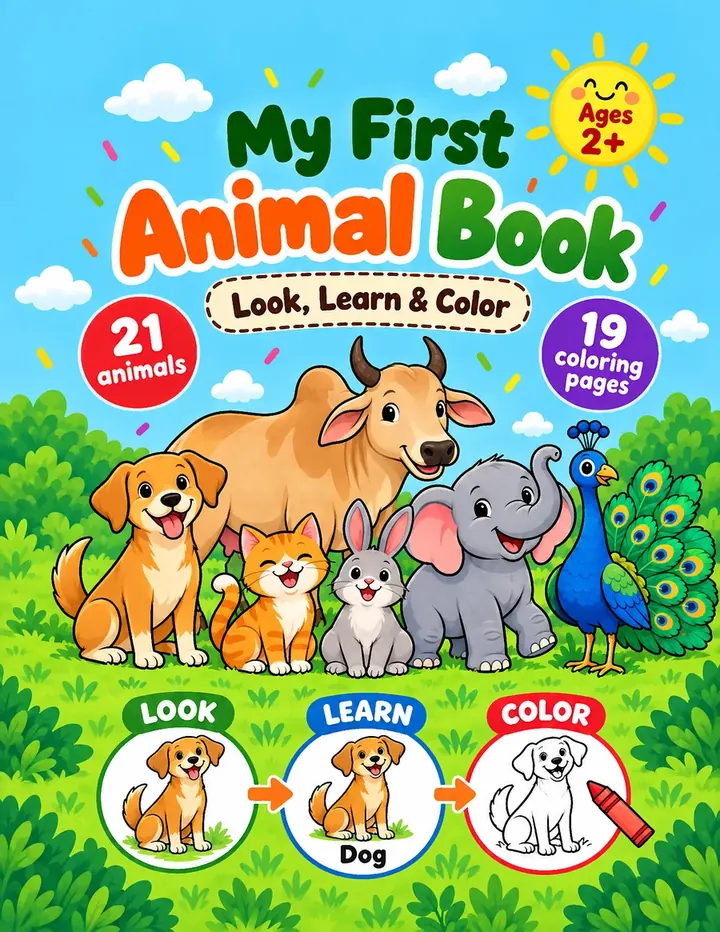
Pets, farm friends, garden and sky, then wild animals. Each one looks like the real animal and comes with a true fact, its baby’s name, its sound and a way to move like it. A small sign shows how to stay safe: ask first, look and wave, or watch from far away.
21 animals
19 coloring pages
4 games
28 pages
Games: Peekaboo! Who’s hiding? · Find my baby! · Fly, swim or walk? · Small to big
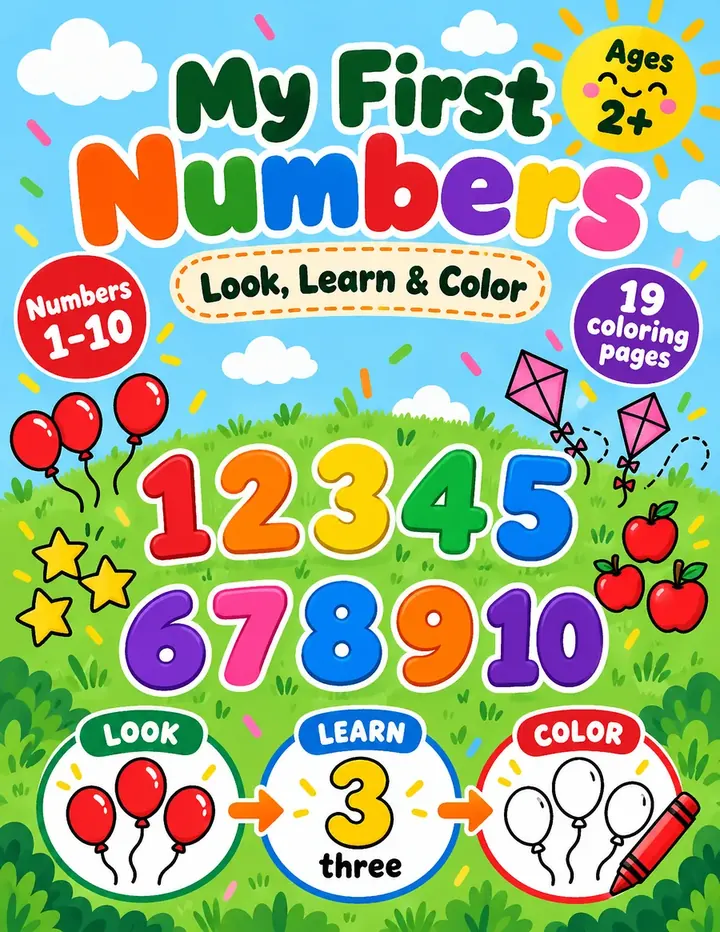
Each number has a big numeral to color and real things to count. The pictures sit like dice for 1 to 5 and in rows of five for 6 to 10, so small groups can be seen at a glance. Then come zero, more or fewer, one more, and counting fingers, faces and farm friends.
Numbers 0–10
19 coloring pages
4 games
28 pages
Games: Dot match! · Hop along the number path · How many? · Join the dots 1 to 10
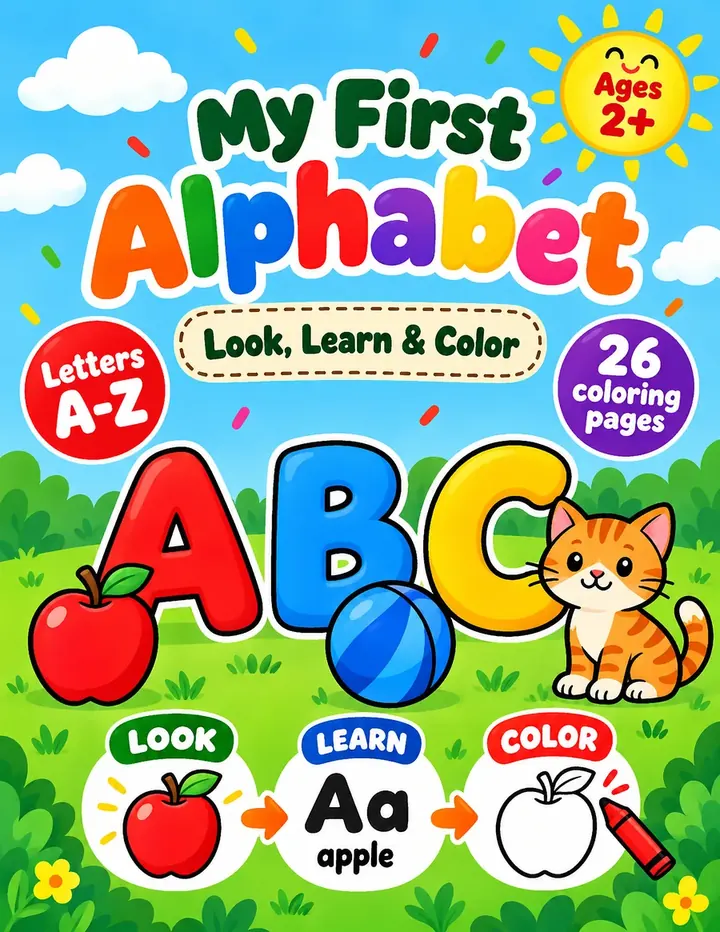
Every page has a big and a small letter to trace with a finger, next to a picture that starts with it. Children say the letter’s name and sound, move, then color. The book ends with the first letter of the child’s own name, an ABC chart to sing and an “I know my letters!” certificate.
Letters A–Z
26 coloring pages
4 games
36 pages
Games: Big and small letters · Find the M! · What does it start with? · Hop along the alphabet path
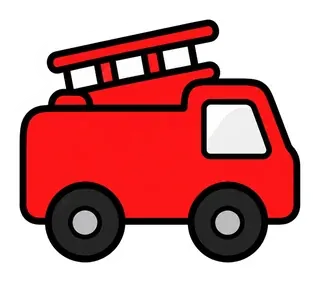
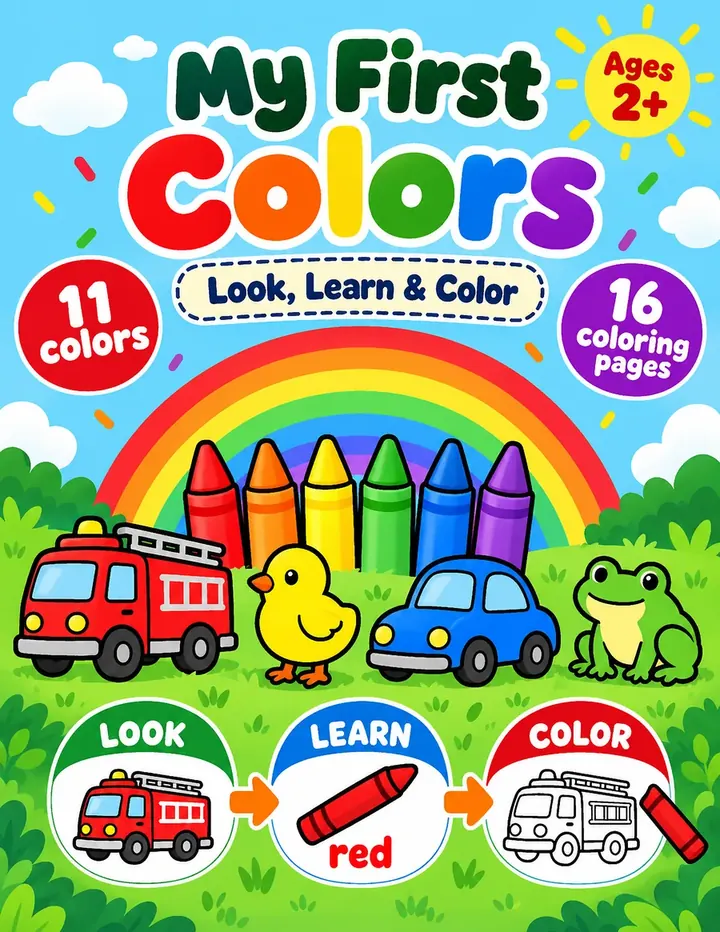
Each color has a big picture to color with one crayon and more things of that color to spot: a red fire engine, a yellow chick, a blue car, all the way to a white duck. Children say the thing first and the color second, mix two colors into a new one, and eat a rainbow.
11 colors
16 coloring pages
4 games
24 pages
Games: Color match · Find the green things! · Color by dots · Hop along the rainbow path
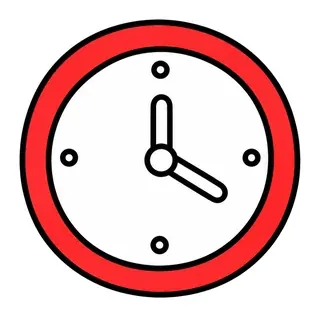
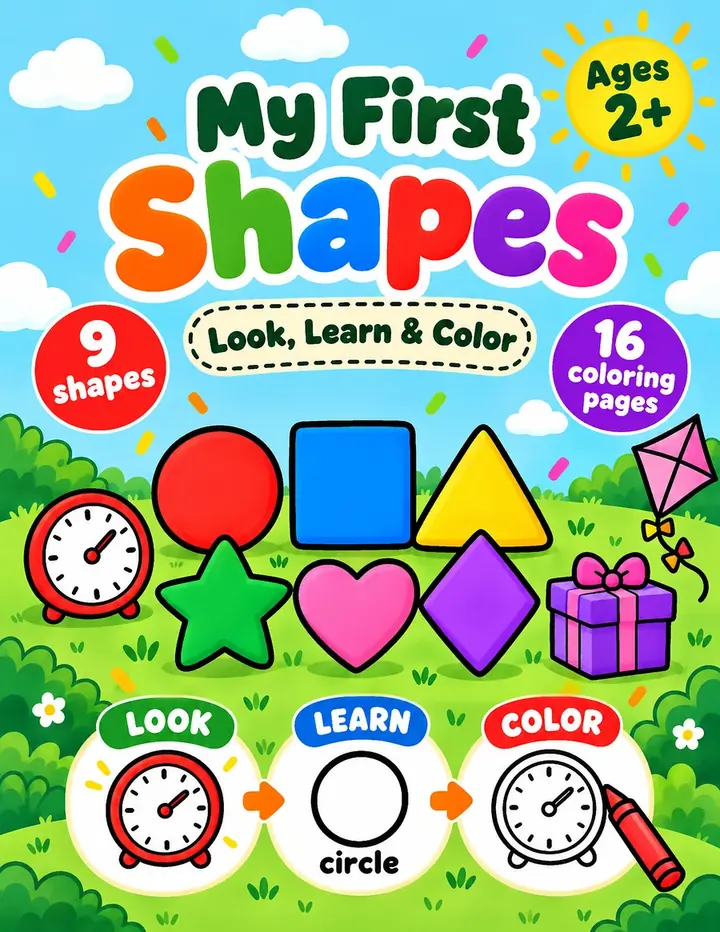
Every shape is big enough to trace with a finger, with its corners numbered for a shape-detective count, next to a real thing of that shape: a round clock, a square gift box, a triangle party hat. Children see that a triangle is still a triangle when it turns, and build a house, a train and a cat from shapes.
9 shapes
16 coloring pages
4 games
24 pages
Games: Shape match · Shape detective · Trace the shapes · Hop along the shape path
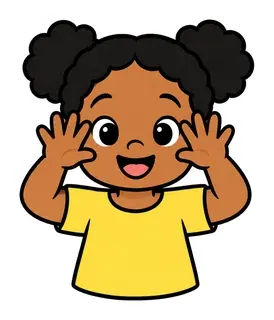
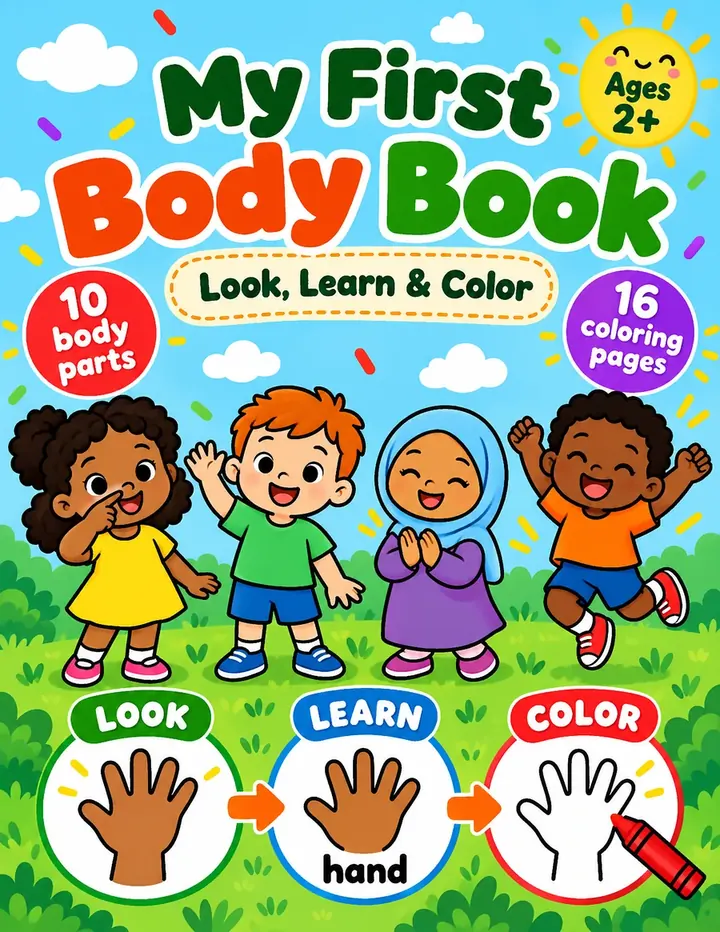
Children of many backgrounds show what bodies can do: eyes that see, ears that hear, hands that clap and feet that jump. Children point to each part, say what it does, move, then color. Then come six healthy habits, from washing hands and brushing teeth to drinking water and sleep.
10 body parts
6 habits
16 coloring pages
4 games
24 pages
Games: Peekaboo! Who’s hiding? · Which part do I use? · Morning to night · Count with me!
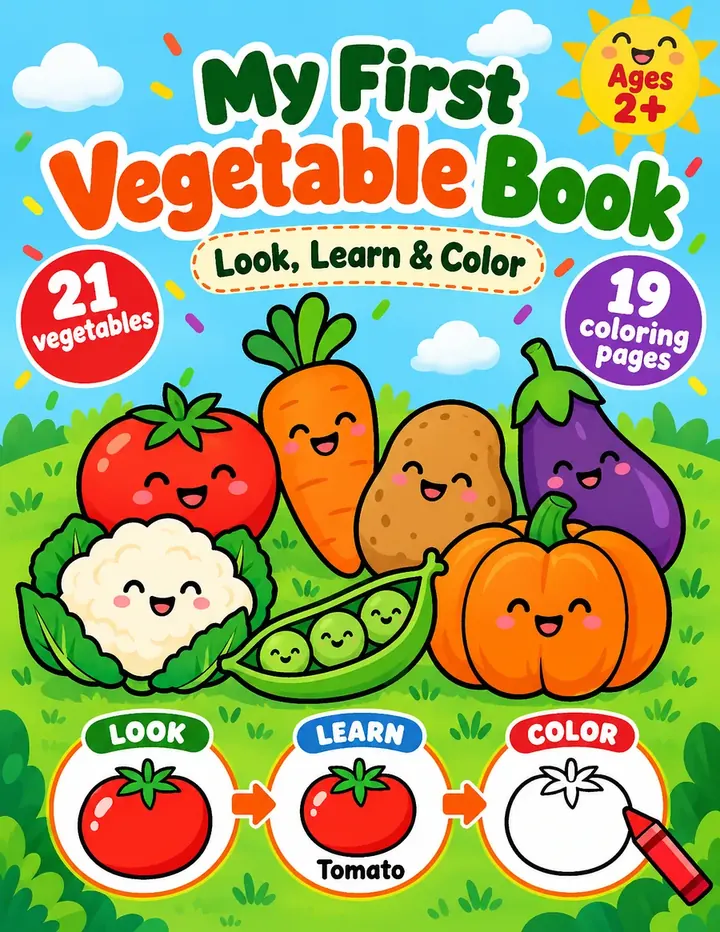
Meet vegetables that grow under the ground, in pods, as leaves and flowers, and on plants and vines. Clap the beats in each name, hear a true fact, move, then color. A small badge on each page gives a kitchen-safety tip: wash me, cook me soft, or grate me.
21 vegetables
19 coloring pages
4 games
28 pages
Games: Whose shadow is it? · Count with me! · Which part do we eat? · Small to big
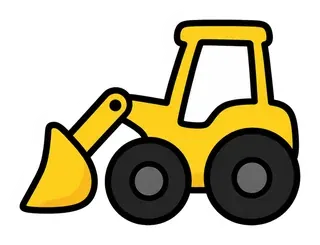
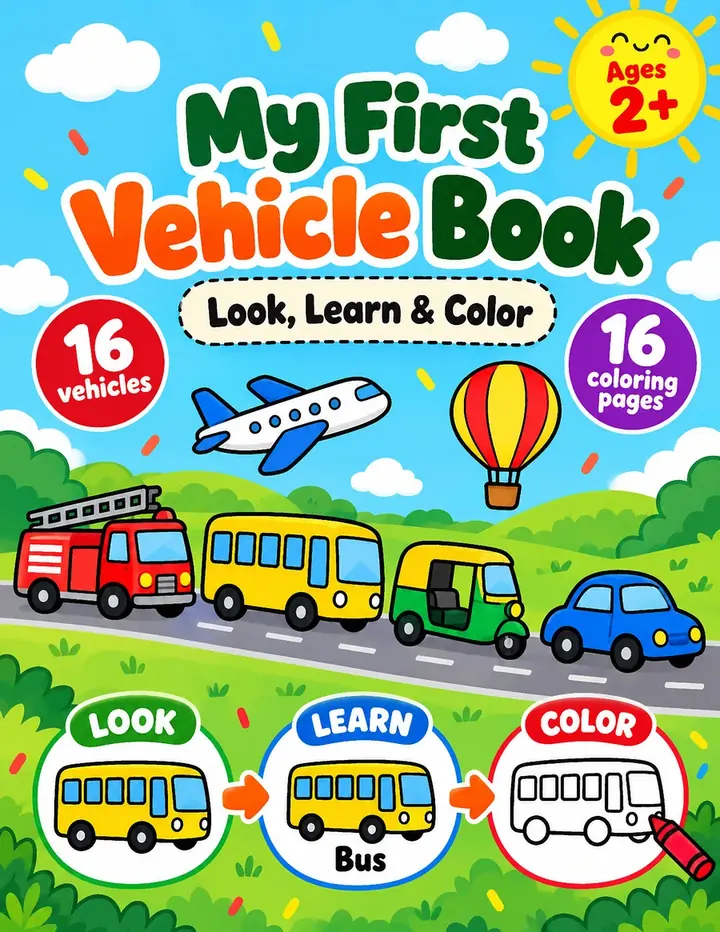
Cars, buses and auto-rickshaws, busy helpers like the fire engine and the digger, then trains, boats and things that fly. Children say each vehicle’s sound, move like it and color. A small badge on each page gives one safety habit: buckle up, wear a helmet or hold a grown-up’s hand.
16 vehicles
16 coloring pages
4 games
24 pages
Games: Count with me! · Whose shadow is it? · Small to big · Road, rails, water or sky?
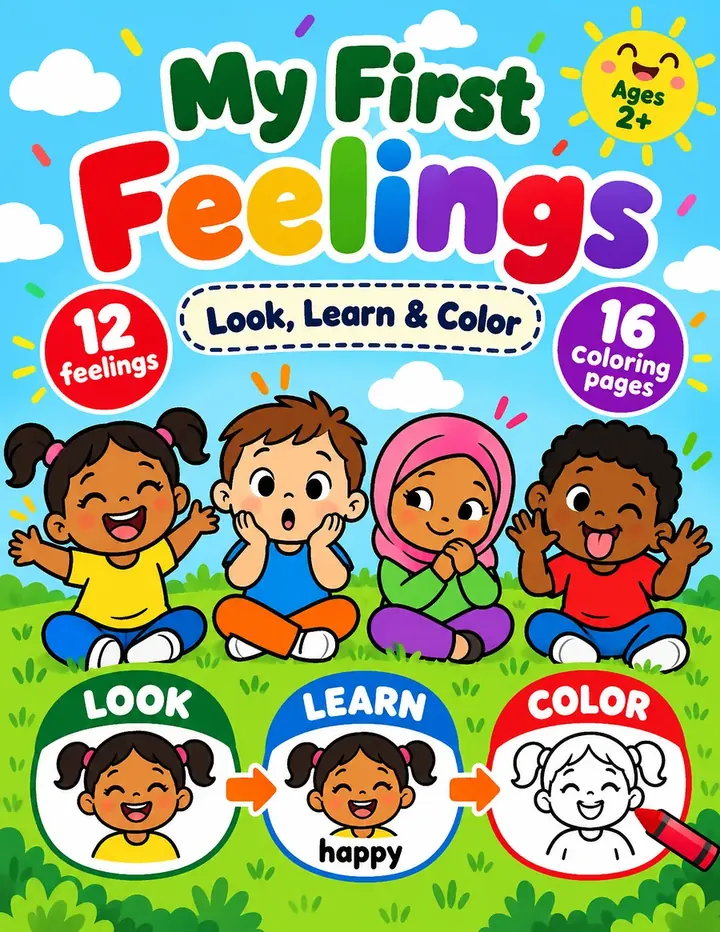
Children of many backgrounds show happy, sad, angry, scared and eight more feelings. Name the feeling, make the face, then color. The last part offers four calm-down ideas: smell the flower and blow the candle, a big hug, counting to five and asking for help.
12 feelings
16 coloring pages
4 games
24 pages
Games: Find the same face! · Peekaboo! Who’s hiding? · Count the faces! · What could help?
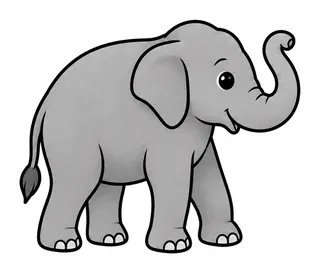
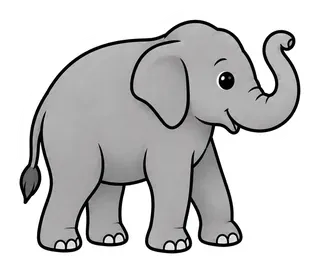
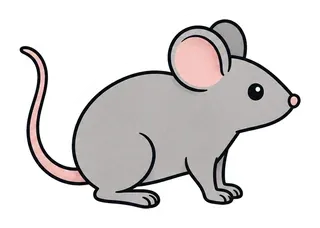
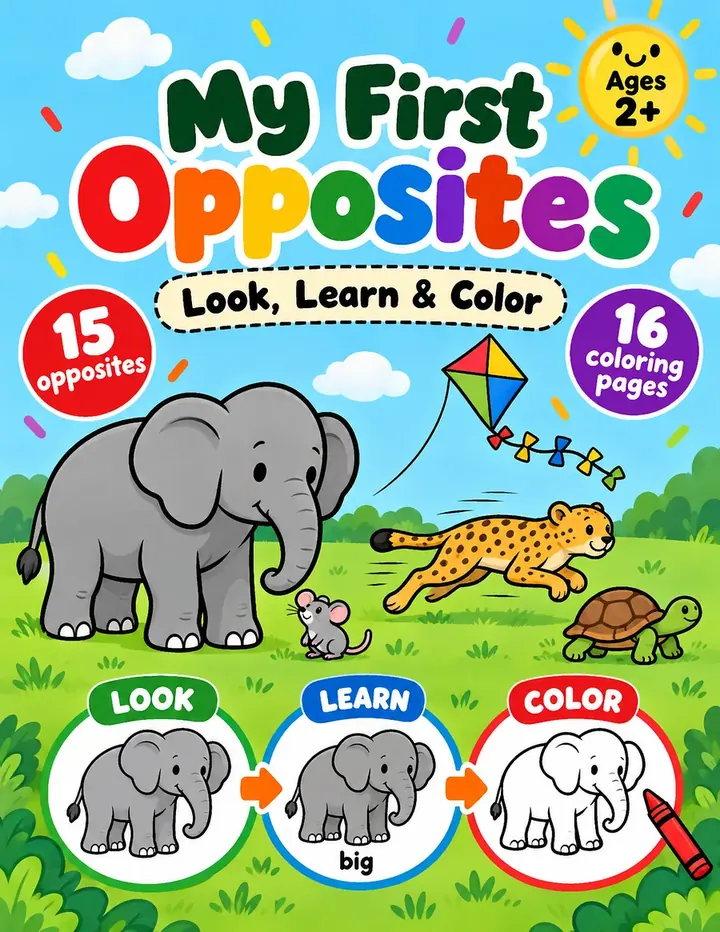
Every page shows two pictures side by side: a big elephant and a small mouse, a fast cheetah and a slow tortoise, a hot cup of tea and a cold ice cream. Children say the words in a big or a tiny voice, act them out, then color both pictures.
15 opposites
16 coloring pages
4 games
24 pages
Games: Find the opposite! · Small to big · Whose shadow is it? · Day or night?
Every page follows the same four steps. The rhythm is simple enough for a two-year-old, and it gives grown-ups something to say at each step.
Look Step 1
Point to the colored picture and name it together. It shows the real colors and shape.
Say Step 2
Say the name, a sound or a true fact: “Woof!”, “b… b… ball”, “three red balloons”.
Move Step 3
Clap, hop, flap or jump the number. Acting out a new word helps it stick.
Color Step 4
Use the one or two crayons shown on the page. Every mark counts.
Below every picture, a Together idea gives grown-ups one question or game to try, such as “Is it big or small? Soft or rough?”
Try a page
Color it yourself
Watch the crayon fill a picture with its real colors, or pick a crayon and scribble on the picture. One picture from each book.
Picture
Crayon
My crayons: orange and green, as the book suggests. ★ marks them.
Thinking skills
Six playful ways to think
Each Together idea uses one of six ways of thinking from the revised Bloom’s taxonomy (Anderson & Krathwohl, 2001). Across a book, children name and remember, explain, try things out, look closely, choose and check, and invent.
Remember
Spot & name
Point to a picture, say its name and find it again.
“Where is the mango?”
My First Fruit Book
Understand
Tell me about it
Talk about size, feel, more and fewer, and sounds.
“Is it big or little?”
My First Fruit Book
Apply
Try it out
Draw in the air, hop, count jumps and trace.
“Can you make a curvy line?”
My First Fruit Book
Analyze
Explore the parts
Look closely at parts, lines, groups and patterns.
“Show me the leaf and the stem.”
My First Fruit Book
Evaluate
Choose & check
Pick an answer, then check it by counting or saying it.
“Which crayon matches the leaf?”
My First Fruit Book
Create
Imagine something new
Invent stories, silly sentences and new creatures.
“Let’s invent a funny fruit!”
My First Fruit Book
Learning outcomes
What children practice
Each book gives children many small chances to practice skills that matter between ages 2 and 5. These are the skills the pages and games are designed around. Every child moves at their own pace.
New words
I can name 21 fruits
One fruit per page, from mango and guava to jamun and ber.
Sounds in words
I can clap the beats in a word
Every fruit name comes in claps, like man-go.
Shapes & colors
I can spot shapes, curves and stripes
The parts move from simple shapes to curves and stripes, then groups and patterns.
Matching
I can match a fruit to its shadow
Game: Which shadow is mine?
Hand control
I can follow a line with my finger
Game: Into the bowl! Straight, hill, wave and zigzag paths.
Early math
I can count up to four
Game: Count with me! Touch each fruit, then say the last number again.
Sorting
I can sort fruits by color
Game: Which basket? Red, yellow or green.
Talking
I can talk about my fruit
Together: “Is it big or little? Which crayon matches the leaf?”
New words
I can name 21 animals
Pets, farm friends, garden and sky, and wild animals.
New words
I know the babies’ names
Calf, kid, lamb, chick, duckling and foal. Game: Find my baby!
Talking & moving
I can make the sound and the move
Say it and Move it on every page: woof, moo, hop and flap.
Thinking
I can tell real from pretend
Real-looking animals and true facts, plus the “Real or pretend?” idea for grown-ups.
Sorting
I can sort animals by how they move
Game: Fly, swim or walk? Some animals can do two.
Early math
I can put animals in order of size
Game: Small to big.
Staying safe
I know how to be safe with animals
A sign on each page: ask first, look and wave, or watch from far away.
Matching
I can find a hiding pet
Game: Peekaboo! Who’s hiding? Look at the ears and heads.
Counting
I can count things one by one
Touch each picture once and say one number.
Counting
I can say how many
Say the last number again: that’s how many!
Number sense
I can see small groups at a glance
Dice patterns for 1 to 5. Game: Dot match!
Number sense
I can use five to count to ten
Rows of five, like a ten-frame, on the pages for 6 to 10.
Comparing
I know zero, more, fewer and one more
Part 3: Zero, more & same.
Moving
I can show numbers with fingers and jumps
Show it and Move it on every number page.
Playing together
I can play a number board game
Game: Hop along the number path, taking turns.
Comparing
I can match one to one
Every dog gets a bone: one for each, so the groups are the same.
Letters
I can name big and small letters
26 letter pages, each with a big and a small letter.
Letter sounds
I can say each letter’s sound
Say it: “b… b… ball”.
Hand control
I can trace letter shapes
Hollow letters to trace with a finger, then color.
Sounds in words
I can hear the first sound in a word
Game: What does it start with?
Letters
I can find the letters of my name
Page: My name starts with…
Looking closely
I can find one letter among many
Game: Find the M!
Order
I can sing and point from A to Z
The ABC chart and the alphabet path game.
Sounds in words
I can play with rhymes
Together: “yo-yo, go-go, slow-slow!” and silly sentences like “Six silly snakes sing!”
New words
I can name 11 colors
One color per page, on real things: a red fire engine, a yellow chick.
Talking
I can say “The ball is red”
Every page says the thing first, then its color.
Matching
I can find one color on many things
More things of each color on every page. Game: Find the green things!
Thinking
I can mix two colors into a new one
Red and yellow make orange, blue and yellow make green, red and blue make purple.
Real world
I know the real colors of animals and foods
Pages: Real animal colors and Eat a rainbow!
Matching
I can match a picture to its crayon
Game: Color match.
Staying safe
I can stop on red and go on green
The traffic-light page and its “Red light, green light” game.
Point to it on every page. Pointing to body parts is a milestone at 2 years.
Senses
I know what my senses do
I see with my eyes and hear with my ears. Game: Which part do I use?
Healthy habits
I can wash my hands
Scrub with soap for about 20 seconds: hum “Happy Birthday” twice.
Healthy habits
I can brush my teeth
Morning and night, with a grown-up’s help.
Order
I can put my day in order
Game: Morning to night.
Moving
I can wiggle, clap, stretch and jump
Move it on every page.
Belonging
I know every body is different
Children of many backgrounds, with different skin, hair and clothes.
New words
I can name 21 vegetables
From potato and peas to okra and bitter gourd.
Sounds in words
I can clap the beats in a word
Clap it! on every page: to-ma-to.
Science
I know which part of a plant we eat
Roots, leaves, flowers and seeds. Game: Which part do we eat?
Healthy eating
I can try a tiny taste
Taste stars on the certificate, and tiny tastes again and again.
Matching
I can match a vegetable to its shadow
Game: Whose shadow is it?
Early math
I can count up to four
Game: Count with me!
Comparing
I can put vegetables in order of size
Game: Small to big.
Staying safe
I know some foods need cooking
A badge on each page: wash me, cook me soft, or grate me.
New words
I can name 16 vehicles
On the road, busy helpers, rails and water, and in the sky.
Sounds
I can make vehicle sounds
Say it on every page: vroom, choo-choo, nee-naw!
Understanding
I know what helpers do
Fire engines, ambulances, police cars, diggers and tractors.
Sorting
I can sort vehicles by where they go
Game: Road, rails, water or sky?
Early math
I can count up to four
Game: Count with me!
Comparing
I can put vehicles in order of size
Game: Small to big.
Staying safe
I know road-safety habits
Buckle up, wear a helmet, hold a grown-up’s hand.
Moving
I can steer, pedal and fly
Move it on every page.
New words
I can name 12 feelings
Happy, sad, angry, scared, surprised, sleepy, shy, silly, calm, proud, loved and excited.
Looking closely
I can read a face
Eyebrows, eyes and mouths. Game: Find the same face!
Talking
I can say how I feel
Say it on every page: “I feel happy!”
Showing
I can show a feeling with my face
Show me on every page, and the mirror game for grown-ups.
Calming down
I know ways to feel better
Smell the flower and blow the candle, a hug, counting to five, asking for help.
Kindness
I can ask before a hug
Together: “Can I have a hug?”, and it’s OK to say no.
Early math
I can count up to four
Game: Count the faces!
Choosing
I can choose what could help
Game: What could help? There is no wrong answer.
New words
I know 15 pairs of opposites
Big and small, fast and slow, hot and cold, day and night and more.
Comparing
I can compare two things
Two pictures side by side on every page.
Space words
I know up, down, in and out
Words about space that support early spatial thinking.
Matching
I can find the opposite
Game: Find the opposite!
Comparing
I can put things in order of size
Game: Small to big.
Looking closely
I can match a picture to its shadow
Game: Whose shadow is it?
Moving & voices
I can act out opposites
Stretch up big, curl up small, roar loud, whisper quiet.
Sorting
I can sort day and night
Game: Day or night?
Skills across the series
Which skills each book focuses on
Skill
Fruits
Animals
Numbers
Alphabet
Colors
Shapes
Body
Vegetables
Vehicles
Feelings
Opposites
Main focusAlso practiced– Not a focus
The books are made for shared play. They are not a developmental assessment and have not been clinically tested.
Research
The research behind the pages
Every book ends with a short list of sources for grown-ups. These are the main ideas the books are built on, and where you will find each one.
Real pictures, real facts
Young children learned more true facts about animals from realistic picture books than from books where animals talk and wear clothes. Very young children also carry what they learn from picture books into real life more easily when the pictures look real.
Ganea et al., 2014; Ganea, Pickard & DeLoache, 2008
FruitsAnimals
Move it to learn it
Preschoolers learned new words better when they acted them out with their whole body. That is why pages ask children to hop, flap, clap and jump.
Reading together works best as a conversation: ask open questions, build on your child’s answers and take turns. These back-and-forth moments support language and the growing brain.
Whitehurst et al., 1988; Center on the Developing Child, Harvard University
FruitsAnimals
How children learn to count
Good counting means one number for each thing, always in the same order, with the last number telling how many. Children also see small groups at a glance, gain from talk about bigger numbers up to ten, and grow their number sense with simple number board games.
Knowing letter names and sounds is one of the best early signs of later reading. Children tend to learn the letters of their own name first, exploring letter shapes by touch helped children link letters and sounds, and pointing to print while reading builds print awareness.
National Early Literacy Panel, 2008; Treiman & Broderick, 1998; Bara et al., 2004; Justice & Ezell, 2002
Alphabet
The thing first, then the color
Two-year-olds learned color words when they heard “This crayon is red”, but not when they heard “This is a red crayon”. Children also learn color words slowly, comparing the same color on many things. Every color page says the thing first.
Preschoolers learned shapes best through guided play that hunted for clues such as corners and sides, and tracing shapes as well as looking at them helped. Young children also need to see shapes turned around and stretched, not only in one position.
Fisher et al., 2013; Kalénine, Pinet & Gentaz, 2011; Clements et al., 1999
Shapes
Point, name and care
Pointing to at least two body parts when asked is one of the CDC’s milestones at 2 years. The healthy habits follow published guidance: about 20 seconds of handwashing with soap, a rice-grain smear of fluoride toothpaste under age 3, and 11 to 14 hours of sleep a day for 1- and 2-year-olds.
CDC; Clark, Keels & Slayton, 2020; Paruthi et al., 2016
Body
Familiar foods feel friendlier
Toddlers were less wary of fruits and vegetables they had seen in a picture book, and children who were offered a vegetable every day for two weeks came to like it more. Every vegetable page invites a tiny taste.
Houston-Price, Butler & Shiba, 2009; Wardle et al., 2003
VegetablesColors
Follow their interests
Children learn new words more easily about the things that interest them, and vehicles are a favorite topic for many toddlers. Sound words like “vroom” and “choo-choo” make naming fun.
Mani & Ackermann, 2018
VehiclesAnimals
Words for feelings
Preschoolers who understood feelings got along better with other children, and parents who talk about feelings and coach their children through them help children manage big emotions.
Denham et al., 2003; Gottman, Katz & Hooven, 1996
FeelingsBody
Compare to understand
Seeing two things side by side helps young children work out what a describing word like “big” means, and children who heard and used more words about space, such as up, down, in and out, did better on spatial tasks later.
In open-ended art, the process matters more than a perfect result. That is why every book says any marks count, and why one or two crayons are plenty.
Bongiorno, 2014
FruitsAll books
Six ways to think
The Together ideas move from naming and remembering to explaining, trying out, looking closely, choosing and inventing, following the revised Bloom’s taxonomy.
Anderson & Krathwohl, 2001
All books
Safety first
The notes for grown-ups follow published guidance on small parts for children under 3, choking risks from whole grapes, hard raw vegetables and whole corn kernels, young children around pets, car seats and toothpaste for toddlers.
U.S. Consumer Product Safety Commission; Lumsden & Cooper, 2017; CDC; American Academy of Pediatrics; Durbin & Hoffman, 2018; Clark, Keels & Slayton, 2020
All books
Sources in My First Fruit Book
Bongiorno, L. (2014). How process-focused art experiences support preschoolers. Teaching Young Children, NAEYC.
Centers for Disease Control and Prevention. Learn the Signs. Act Early. Milestones by 2 years.
Center on the Developing Child, Harvard University. Serve and return (key concept).
Anderson, L. W., & Krathwohl, D. R. (Eds.). (2001). A taxonomy for learning, teaching, and assessing. Longman.
Bongiorno, L. 10 things every parent should know about play. NAEYC for Families.
Lumsden, A. J., & Cooper, J. G. (2017). The choking hazard of grapes: A plea for awareness. Archives of Disease in Childhood, 102(5), 473–474.
Sources in My First Animal Book
Ganea, P. A., Canfield, C. F., Simons-Ghafari, K., & Chou, T. (2014). Do cavies talk? The effect of anthropomorphic picture books on children’s knowledge about animals. Frontiers in Psychology, 5, 283.
Ganea, P. A., Pickard, M. B., & DeLoache, J. S. (2008). Transfer between picture books and the real world by very young children. Journal of Cognition and Development, 9(1), 46–66.
Mavilidi, M.-F., Okely, A. D., Chandler, P., Cliff, D. P., & Paas, F. (2015). Effects of integrated physical exercises and gestures on preschool children’s foreign language vocabulary learning. Educational Psychology Review, 27(3), 413–426.
Whitehurst, G. J., et al. (1988). Accelerating language development through picture book reading. Developmental Psychology, 24(4), 552–559.
Anderson, L. W., & Krathwohl, D. R. (Eds.). (2001). A taxonomy for learning, teaching, and assessing. Longman.
American Academy of Pediatrics. Dog bite prevention tips. HealthyChildren.org.
Centers for Disease Control and Prevention. Healthy Pets: Infants and young children.
Sources in My First Numbers
Gelman, R., & Gallistel, C. R. (1978). The child’s understanding of number. Harvard University Press.
Clements, D. H. (1999). Subitizing: What is it? Why teach it? Teaching Children Mathematics, 5(7), 400–405.
Gunderson, E. A., & Levine, S. C. (2011). Some types of parent number talk count more than others: Relations between parents’ input and children’s cardinal-number knowledge. Developmental Science, 14(5), 1021–1032.
Siegler, R. S., & Ramani, G. B. (2008). Playing linear numerical board games promotes low-income children’s numerical development. Developmental Science, 11(5), 655–661.
Mavilidi, M.-F., Okely, A. D., Chandler, P., Cliff, D. P., & Paas, F. (2015). Effects of integrated physical exercises and gestures on preschool children’s foreign language vocabulary learning. Educational Psychology Review, 27(3), 413–426.
Anderson, L. W., & Krathwohl, D. R. (Eds.). (2001). A taxonomy for learning, teaching, and assessing. Longman.
U.S. Consumer Product Safety Commission. Small parts for toys and children’s products (16 C.F.R. Part 1501).
Sources in My First Alphabet
National Early Literacy Panel. (2008). Developing early literacy: Report of the National Early Literacy Panel. National Institute for Literacy.
Treiman, R., & Broderick, V. (1998). What’s in a name: Children’s knowledge about the letters in their own names. Journal of Experimental Child Psychology, 70(2), 97–116.
Justice, L. M., Pence, K., Bowles, R. B., & Wiggins, A. (2006). An investigation of four hypotheses concerning the order by which 4-year-old children learn the alphabet letters. Early Childhood Research Quarterly, 21(3), 374–389.
Bara, F., Gentaz, E., Colé, P., & Sprenger-Charolles, L. (2004). The visuo-haptic and haptic exploration of letters increases the kindergarten-children’s understanding of the alphabetic principle. Cognitive Development, 19(3), 433–449.
Justice, L. M., & Ezell, H. K. (2002). Use of storybook reading to increase print awareness in at-risk children. American Journal of Speech-Language Pathology, 11(1), 17–29.
Mavilidi, M.-F., Okely, A. D., Chandler, P., Cliff, D. P., & Paas, F. (2015). Effects of integrated physical exercises and gestures on preschool children’s foreign language vocabulary learning. Educational Psychology Review, 27(3), 413–426.
Anderson, L. W., & Krathwohl, D. R. (Eds.). (2001). A taxonomy for learning, teaching, and assessing. Longman.
U.S. Consumer Product Safety Commission. Small parts for toys and children’s products (16 C.F.R. Part 1501).
Sources in My First Colors
Ramscar, M., Yarlett, D., Dye, M., Denny, K., & Thorpe, K. (2010). The effects of feature-label-order and their implications for symbolic learning. Cognitive Science, 34(6), 909–957.
Sandhofer, C. M., & Smith, L. B. (1999). Learning color words involves learning a system of mappings. Developmental Psychology, 35(3), 668–679.
Wagner, K., Dobkins, K., & Barner, D. (2013). Slow mapping: Color word learning as a gradual inductive process. Cognition, 127(3), 307–317.
Berlin, B., & Kay, P. (1969). Basic color terms: Their universality and evolution. University of California Press.
Houston-Price, C., Butler, L., & Shiba, P. (2009). Visual exposure impacts on toddlers’ willingness to taste fruits and vegetables. Appetite, 53(3), 450–453.
Mavilidi, M.-F., Okely, A. D., Chandler, P., Cliff, D. P., & Paas, F. (2015). Effects of integrated physical exercises and gestures on preschool children’s foreign language vocabulary learning. Educational Psychology Review, 27(3), 413–426.
Anderson, L. W., & Krathwohl, D. R. (Eds.). (2001). A taxonomy for learning, teaching, and assessing. Longman.
U.S. Consumer Product Safety Commission. Small parts for toys and children’s products (16 C.F.R. Part 1501).
Sources in My First Shapes
Clements, D. H., Swaminathan, S., Hannibal, M. A. Z., & Sarama, J. (1999). Young children’s concepts of shape. Journal for Research in Mathematics Education, 30(2), 192–212.
Fisher, K. R., Hirsh-Pasek, K., Newcombe, N., & Golinkoff, R. M. (2013). Taking shape: Supporting preschoolers’ acquisition of geometric knowledge through guided play. Child Development, 84(6), 1872–1878.
Kalénine, S., Pinet, L., & Gentaz, E. (2011). The visual and visuo-haptic exploration of geometrical shapes increases their recognition in preschoolers. International Journal of Behavioral Development, 35(1), 18–26.
Verdine, B. N., Golinkoff, R. M., Hirsh-Pasek, K., & Newcombe, N. S. (2017). Links between spatial and mathematical skills across the preschool years. Monographs of the Society for Research in Child Development, 82(1).
Mavilidi, M.-F., Okely, A. D., Chandler, P., Cliff, D. P., & Paas, F. (2015). Effects of integrated physical exercises and gestures on preschool children’s foreign language vocabulary learning. Educational Psychology Review, 27(3), 413–426.
Anderson, L. W., & Krathwohl, D. R. (Eds.). (2001). A taxonomy for learning, teaching, and assessing. Longman.
U.S. Consumer Product Safety Commission. Small parts for toys and children’s products (16 C.F.R. Part 1501).
Sources in My First Body Book
Centers for Disease Control and Prevention. Learn the Signs. Act Early. Milestones by 2 years.
Centers for Disease Control and Prevention. When and how to wash your hands.
Clark, M. B., Keels, M. A., & Slayton, R. L. (2020). Fluoride use in caries prevention in the primary care setting. Pediatrics, 146(6), e2020034637.
Paruthi, S., et al. (2016). Recommended amount of sleep for pediatric populations: A consensus statement of the American Academy of Sleep Medicine. Journal of Clinical Sleep Medicine, 12(6), 785–786.
Mavilidi, M.-F., Okely, A. D., Chandler, P., Cliff, D. P., & Paas, F. (2015). Effects of integrated physical exercises and gestures on preschool children’s foreign language vocabulary learning. Educational Psychology Review, 27(3), 413–426.
Anderson, L. W., & Krathwohl, D. R. (Eds.). (2001). A taxonomy for learning, teaching, and assessing. Longman.
Sources in My First Vegetable Book
Houston-Price, C., Butler, L., & Shiba, P. (2009). Visual exposure impacts on toddlers’ willingness to taste fruits and vegetables. Appetite, 53(3), 450–453.
Wardle, J., Cooke, L. J., Gibson, E. L., Sapochnik, M., Sheiham, A., & Lawson, M. (2003). Increasing children’s acceptance of vegetables; a randomized trial of parent-led exposure. Appetite, 40(2), 155–162.
National Early Literacy Panel. (2008). Developing early literacy: Report of the National Early Literacy Panel. National Institute for Literacy.
Mavilidi, M.-F., Okely, A. D., Chandler, P., Cliff, D. P., & Paas, F. (2015). Effects of integrated physical exercises and gestures on preschool children’s foreign language vocabulary learning. Educational Psychology Review, 27(3), 413–426.
Anderson, L. W., & Krathwohl, D. R. (Eds.). (2001). A taxonomy for learning, teaching, and assessing. Longman.
Centers for Disease Control and Prevention. Choking hazards. Infant and Toddler Nutrition.
Sources in My First Vehicle Book
Mani, N., & Ackermann, L. (2018). Why do children learn the words they do? Child Development Perspectives, 12(4), 253–257.
Durbin, D. R., Hoffman, B. D., & AAP Council on Injury, Violence, and Poison Prevention. (2018). Child passenger safety. Pediatrics, 142(5), e20182460.
Mavilidi, M.-F., Okely, A. D., Chandler, P., Cliff, D. P., & Paas, F. (2015). Effects of integrated physical exercises and gestures on preschool children’s foreign language vocabulary learning. Educational Psychology Review, 27(3), 413–426.
Anderson, L. W., & Krathwohl, D. R. (Eds.). (2001). A taxonomy for learning, teaching, and assessing. Longman.
Sources in My First Feelings
Denham, S. A., Blair, K. A., DeMulder, E., Levitas, J., Sawyer, K., Auerbach-Major, S., & Queenan, P. (2003). Preschool emotional competence: Pathway to social competence? Child Development, 74(1), 238–256.
Gottman, J. M., Katz, L. F., & Hooven, C. (1996). Parental meta-emotion philosophy and the emotional life of families: Theoretical models and preliminary data. Journal of Family Psychology, 10(3), 243–268.
Mavilidi, M.-F., Okely, A. D., Chandler, P., Cliff, D. P., & Paas, F. (2015). Effects of integrated physical exercises and gestures on preschool children’s foreign language vocabulary learning. Educational Psychology Review, 27(3), 413–426.
Anderson, L. W., & Krathwohl, D. R. (Eds.). (2001). A taxonomy for learning, teaching, and assessing. Longman.
Sources in My First Opposites
Pruden, S. M., Levine, S. C., & Huttenlocher, J. (2011). Children’s spatial thinking: Does talk about the spatial world matter? Developmental Science, 14(6), 1417–1430.
Waxman, S. R., & Klibanoff, R. S. (2000). The role of comparison in the extension of novel adjectives. Developmental Psychology, 36(5), 571–581.
Mavilidi, M.-F., Okely, A. D., Chandler, P., Cliff, D. P., & Paas, F. (2015). Effects of integrated physical exercises and gestures on preschool children’s foreign language vocabulary learning. Educational Psychology Review, 27(3), 413–426.
Anderson, L. W., & Krathwohl, D. R. (Eds.). (2001). A taxonomy for learning, teaching, and assessing. Longman.
Sources inform the guidance for grown-ups and do not endorse the books.
For grown-ups
A few happy minutes a day
The books work best as short moments you share. These tips come from the grown-ups pages inside the books.
A page is plenty
One page at a time is enough. Stop while it’s still fun and come back tomorrow.
Follow your child’s lead
Let them choose the page, the crayon and the pace. Pointing and babbling are answers too.
Every mark counts
Scribbles are how drawing and writing begin. And a blue banana is a great idea!
Use your home language
Say the words in the language you speak at home. Many pages have an “At home we say” line to write it down.
Find it in real life
Spot the fruit or vegetable at the market, the animal or the bus outside, a number on a door or a letter on a sign.
Talk while you color
Ask about the picture as your child colors: “What color is the mango? Where is its leaf?”
Safety first
Use chunky, non-toxic crayons made for young children, and stay close while your child colors.
Keep small parts away from children under 3: beads, buttons, coins, magnets, magnetic letters and button batteries.
Sharing real fruit? For children under 5, cut grapes into quarters and other small round fruits into small pieces, after removing seeds and stones.
Never leave a young child alone with a dog, ask the owner before petting any animal, and wash hands after touching animals.
Sharing real vegetables? Cook hard vegetables until soft or grate them, and cut round foods such as cherry tomatoes small. Whole corn kernels can also cause choking.
Never leave a young child alone in the bath. Under age 3, use only a rice-grain smear of fluoride toothpaste.
Near roads, hold your child’s hand. In a car, buckle your child into a car seat that fits them, on every trip.
The authors
Written by Dr Alia Naaz and Uzra Khan
AN
Dr Alia Naaz
Gold Medalist · MBBS
UK
Uzra Khan
Gold Medalist · MPharm
Both authors are gold medalists, in medicine and in pharmacy. Their health-sciences background shows in the details: a safety note for grown-ups in every book, true facts in place of make-believe, and the research behind each idea listed at the back.
Questions
Good to know
Which ages are the books for?
Ages 2 and up. The pictures are big and simple for two-year-olds, and the games and Together ideas keep working for children up to about 5.
Why only one or two crayons a page?
Two-year-olds manage one or two colors comfortably. Fewer choices keep the focus on the picture and the talk, and each page shows which crayons match the real thing. Children are always free to choose other colors.
Does my child need to color inside the lines?
No. Any marks count. Scribbling is how drawing and writing begin, and the thick, bold outlines are there to help, not to judge.
Which book should we start with?
Any of them. Each book stands on its own and follows the same page rhythm. Fruits, vegetables, animals, vehicles and colors are a gentle first step; shapes, numbers, letters and opposites add early math, reading and thinking words; and the body and feelings books help with everyday routines and big feelings.
Why do the children look different on every page?
The Body and Feelings books show children from many backgrounds, with different skin, hair and clothes, so every child can find someone like them. Children can color skin and hair any way they like.
How were the pictures made?
The illustrations were created with AI assistance and then edited for print. Each outline was traced into clean, bold lines for coloring, and each picture shows the real colors of the thing it shows.
What size are the books?
They are paperbacks of 8.5 × 11 inches, printed in color on white paper. Big pages leave room for big pictures and big crayons.
Where can I buy them?
On Amazon, as paperbacks. A link for each book will appear on this page as soon as it goes live.
Look inside
Tap the page, swipe or use the arrow keys to turn pages.






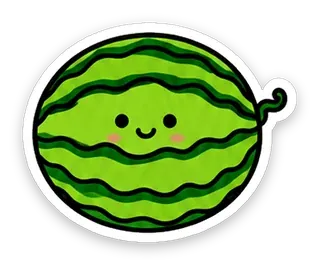
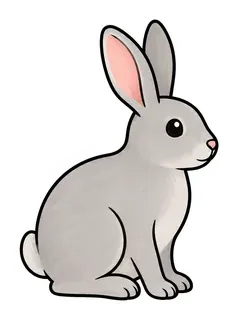

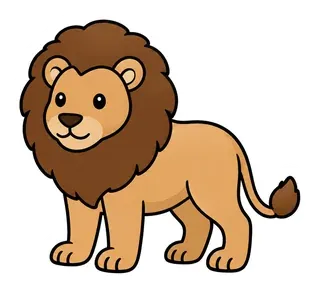
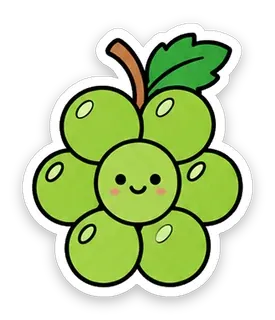











 big
 small
 Sources in My First Fruit Book
 Sources in My First Animal Book
 Sources in My First Numbers
 Sources in My First Alphabet
 Sources in My First Colors
 Sources in My First Shapes
 Sources in My First Body Book
 Sources in My First Vegetable Book
 Sources in My First Vehicle Book
 Sources in My First Feelings
 Sources in My First Opposites